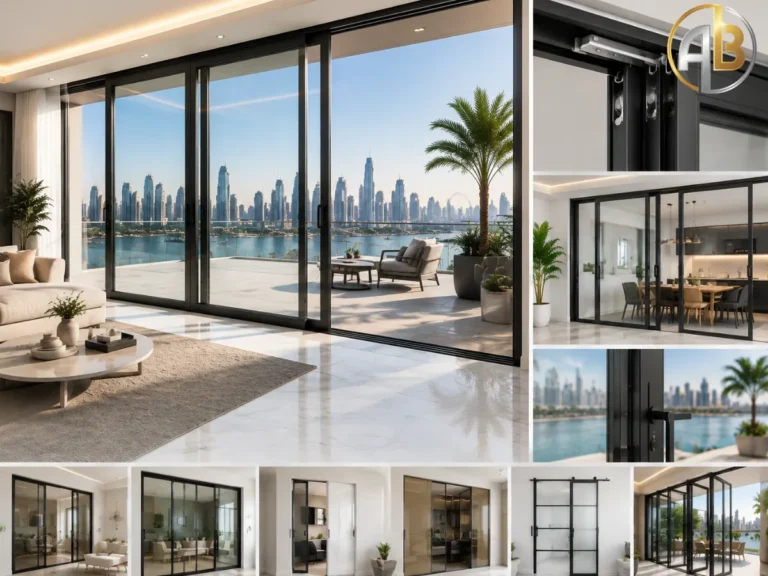

Picture this: A Sunday morning. Coffee in hand. Your living room is flooded with light & no wall separates the inside from the outside. That’s not a showroom fantasy. That’s what a properly installed bi-folding door actually produces in daily life.
But here’s the thing most companies won’t say initially: Not every bi-folding door is worth your money.
- The wrong material
- The wrong spec
- The wrong installer
You’ve paid a significant sum for something that leaks or looks cheap within two winters.
This guide cuts through all of that. Real tak. Sensible advice. No sales waffle.
Why Bi-Folding Doors Hit Different Compared to Regular Doors
A standard door gives you one thing: A way in and out. A sliding door gives you half an opening at best. A bi-folding door gives you the whole wall.
That’s not an exaggeration. The entire width of the opening becomes free when bi-folding door panels fold and stack neatly to one or both sides of the frame.
No frame is eating into the middle. No panel blocking half the view. Just a clean and uninterrupted connection between your interior and whatever’s outside: A garden. A terrace. A courtyard.
The result? Rooms feel larger. Light travels deeper into the space. Your home naturally ventilates on warm days. And every day, the view from your sofa or kitchen is dramatically better than it was before.
Estate agents will also tell you something worth knowing: quality bi-folding doors are one of the features buyers specifically mention and search for. The return on investment isn’t just felt! It shows up in valuations, too.
Aluminium, uPVC, or Timber: Let’s Settle This Once and For All
Go into any showroom. You’ll be given a brochure for all three. Let’s get into what those brochures don’t always tell clearly:
Aluminium bi-folding doors are the most installed for a reason: The frames are narrow! This means more glass and less visual obstruction. Aluminium handles decades of weather without warping or fading.
It comes powder-coated in hundreds of colours, RAL or bespoke. Maintenance is close to zero. Aluminium is the default right answer if your home has a modern and clean appearance.
The frames are heavier than aluminium: This reduces the glass-to-frame ratio slightly: Noticeable on very wide openings. Less so on narrower ones. Thermal performance is strong.
uPVC bi-folds are a smart and durable choice that shouldn’t be dismissed for projects with tighter budgets or smaller openings.
Timber bi-folding doors are for homes where character matters more than convenience: Period properties or cottages: Spaces where the warmth of real wood fits the architecture in a way aluminium simply doesn’t. The trade-off is honest: Timber needs treating or painting periodically.
The result is beautiful if you’re prepared for that. If you’re not, aluminium with a wood-effect finish gets you 80% of the way there with none of the upkeep.
The Size Question: How Wide Does the Opening Need to Be?
Bi-folding doors work across a wide range of opening sizes! But they genuinely earn their place at certain widths:
| Opening Width | Recommended Panels | Notes |
| 1.8m – 2.4m | 2–3 panels | Works well; the sliding door is comparable |
| 2.4m – 4.0m | 3–4 panels | The sweet spot for bi-folds |
| 4.0m – 6.0m | 5–6 panels | Where bi-folds become unbeatable |
| 6.0m+ | 6–8 panels | Grand openings; consider dual-track options |
Height matters just as much as width. Standard height sits around 2.1m! But pushing to 2.4m or taller, where ceiling height allows, makes a room feel genuinely different. More glass equals more sky and more space. Go taller if the structure supports it.
Will Bi-Folding Doors Make Your Home Hotter in the UAE Summer?
This is the question every UAE homeowner should be asking! It’s more important here than anywhere else.
The honest answer: poorly specified bi-folding doors absolutely will increase heat gain. A well-specified system won’t. Here’s what the specification must include for UAE conditions:
Double glazing with solar control glass: Standard clear double glazing lets heat straight through; solar control or low-emissivity (low-E) glass reflects a significant portion of infrared heat before it enters the room
Thermally broken aluminium frames: Aluminium conducts heat unless a non-conductive thermal break separates the inner and outer frame; in UAE temperatures! This is non-negotiable and not optional
Argon-filled glazing units: The gas between panes insulates more effectively than air! This reduces heat transfer
Quality perimeter seals: Keeping conditioned air in and hot outside air out directly affects your cooling costs
Studies by the Dubai Electricity and Water Authority (DEWA) highlight that buildings contribute heavily to energy consumption in the UAE! Glazing performance plays an important role in retaining cool indoor temperatures.
Choosing thermally efficient bi-folding doors is not just about comfort! It’s a smart way to reduce long-term running costs.
Security: What UAE Homeowners Need to Know
A bi-folding door covers a large opening. Security deserves proper attention.
What to look for before you buy:
Multi-point locking: The door should lock at multiple points along the frame! Not just a single central latch
Anti-lift protection: Panels should be secured so they cannot be lifted out of the track from outside
Shoot bolts on outer panels: The panels that don’t function as the everyday traffic door should have additional shoot bolts: Top and bottom
Hardened steel locking hardware: Stainless steel or treated hardware resists salt-air corrosion far better than standard fittings in coastal UAE environments
The UAE’s National Emergency Crisis and Disasters Management Authority (NCEMA) and local municipality building codes set standards for residential construction and safety.
Always confirm your installation meets current local building regulations: A reputable UAE installer will handle this as standard practice.
Three Checks Before You Sign Anything
- Ask for the SHGC rating on the glass: Solar Heat Gain Coefficient measures how much solar radiation passes through; for UAE conditions, look for SHGC of 0.3 or below
- Check the track design: Low-threshold and flush-threshold options exist! Flush tracks are better for indoor-outdoor flow and are especially practical around pool areas and tiled terraces
- Verify the guarantee covers UAE conditions: Some manufacturer warranties have climate exclusions; confirm yours covers high-temperature environments explicitly
Frequently Asked Questions
How long do bi-folding doors last in UAE conditions?
Good-quality aluminium bi-folding doors can last around 25–35 years in the UAE weather conditions.
Do bi-folding doors need municipality approval in the UAE?
Yes! Some villas and communities may require approval before installation. It is best to check with your contractor or community management first.
How much do bi-folding doors cost in the UAE?
Basic bi-folding doors usually cost between AED 8,000–15,000. Premium options can cost AED 18,000 or more.
What’s the best time of year to install bi-folding doors in the UAE?
October to March is considered the best time because of the cooler weather.
Can bi-folding doors handle UAE sandstorms?
Yes! Good-quality bi-folding doors are made with proper seals to help keep out dust and sand.
The Bottom Line
Bi-folding doors are one of the few home improvements that change how a space feels every single day. Better light and a genuine connection to your outdoor space during the UAE’s beautiful cooler months! That connection is something you’ll use and appreciate constantly.
These things matter most:
- Aluminium is the right material for the UAE climate
- Solar control glazing keeps your home cool and your bills reasonable
An experienced local installer who understands UAE building requirements is worth more than the cheapest quote.
Al-Basira works with UAE homeowners to get exactly this right: From first measurement to finished installation with products specified for Gulf conditions! Not imported generic solutions.