
The architect has just handed you the villa plans. The rear wall facing the garden is 6 meters wide. The brief says ‘open it up completely.’ You’ve budgeted for bi-folding doors, but the supplier is quoting you a 100mm frame width, and you already know that’s going to eat the view.
That’s the real problem with standard bi-fold doors in Dubai right now. The frame-to-glass ratio. A slim bi-folding door Dubai solution with a 30–40 mm profile gives you the same structural performance with less than half the visible frame. Most buyers don’t realize the difference until they’re standing in the finished room, wishing they’d asked the right question six months earlier.
Dubai’s villa market added over 7,167 villa sales in the first half of 2025 alone, according to the Dubai Land Department. Every one of those projects makes a door specification decision. This guide tells you exactly what separates an ultra-slim system from a standard bi-fold and how to know which one your project actually needs.
What Makes a Bi-Folding Door ‘Slim’ and Why the Number Matters
The Problem with Standard Profiles
A standard aluminum bi-fold door runs an 80–100mm visible frame at each panel junction. Stack four or five panels across a wide opening, and you’re looking at 400–500 mm of aluminum obstructing your view, even when the doors are closed.
Most homeowners only notice this when the doors are shut. The glass looks smaller than expected. The garden feels further away. That’s not a design problem; it’s a specification problem.
What Ultra-Slim Profiles Actually Deliver
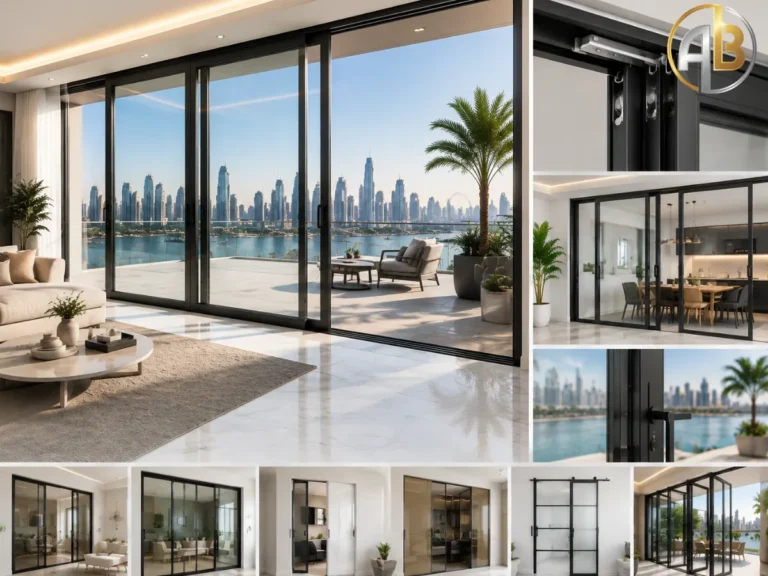
Ultra-slim bi-fold systems run 30–40mm sightlines at each panel junction. Euro Systems’ Gracili Minimal Bi-Fold, for example, offers a 30mm series that reaches 3,000mm in panel height and supports panel weights up to 110 kg, all on a profile you can cover with two fingers.
That strength-to-size ratio is the whole point. Aluminum’s structural properties allow the frame to get narrower without losing rigidity. The glass area increases. The view opens up. The room feels bigger with the doors closed.
The consequence of choosing wrong? You specify a standard system, the villa is built, and the panoramic effect the architect drew never materializes. Replacing doors in a finished villa costs three to four times the original installation.
Slim Bi-Fold vs Slim Sliding Door Dubai: Choosing the Right System
Both systems use narrow aluminium profiles. Both maximize glass. But they open differently, and that difference determines which one belongs on your project.
Bi-Fold: Full Opening, Dramatic Effect
Bi-folding doors stack their panels to one or both sides when fully open. A 6-meter opening can clear 90% of the wall width. That’s the system to choose when you want the indoor and outdoor space to genuinely become one.
The trade-off: They need floor clearance space for the folded stack. On a narrow terrace or a tight internal corridor, that stacked panel depth can create an obstruction.
Slim Sliding: Space-Efficient, Easier Maintenance
A slim sliding-door Dubai installation opens to a maximum of 50% of the wall width. Panels glide past each other or pocket into the wall. No stacking clearance required.
Sliding systems have fewer moving parts. Track cleaning every three months versus bi-fold hinge lubrication every six. Over a ten-year period in Dubai’s sand-heavy environment, that difference adds up.
The right answer depends on one question: Do you need full wall clearance, or just an easy passage between spaces?
Full clearance: Choose a bi-fold.
Passage only: Consider slim sliding.
Ultra-Slim Bi-Fold vs Standard Bi-Fold vs Slim Sliding
| Feature | Standard Bi-Fold (80–100mm) | Ultra-Slim Bi-Fold (30–40mm) | Slim Sliding Door |
| Visible frame width | 80–100mm | 30–40mm | 20–35mm |
| Max opening coverage | Up to 90% of wall | Up to 90% of wall | Up to 50% of wall |
| Panel weight capacity | Up to 80kg | Up to 150kg | Varies by track |
| Thermal break option | Yes | Yes (polyamide barrier) | Yes |
| Best for | Budget renovations | Luxury villas, glass rooms | Space-constrained layouts |
| Maintenance frequency | Hinge lube every 6 months | Hinge lube every 6 months | Track clean every 3 months |
| UAE climate suitability | Moderate | High | High |
Source: Al Basira product specifications and publicly available supplier data, 2026.
How Aluminium Doors and Windows Perform in UAE Heat
Dubai’s summer temperatures exceed 45°C outdoors. Uninsulated aluminum conducts that heat straight into your air-conditioned interior. The frame becomes a radiator.
What a Thermal Break Actually Does
A thermal break is a polyamide barrier inserted between the interior and exterior sections of the aluminium profile. It breaks the heat conduction path. Independent testing shows thermally broken bi-fold frames reduce heat transmission by up to 70% compared to non-broken aluminium.
For a typical 8sqm bi-fold door installation in a Dubai villa, that thermal performance difference translates to estimated AC cost savings of AED 3,000–5,000 per year. The system pays for part of the price premium within three to four years.
What Happens Without One
A non-thermally-broken door in Dubai doesn’t just waste energy. The temperature differential between the frame exterior and your interior air causes condensation on the inside face of the frame, especially in heavily air-conditioned rooms. That moisture damages flooring, sealants, and the door hardware over time.
Al Basira installs thermally broken aluminium systems across Dubai residential and commercial projects. See the full range of aluminium doors and windows designed specifically for UAE climate conditions.
Ready for a slim bi-folding door system for your Dubai project? Request a site visit from Al Basira’s technical team. They’ll measure, quote, and bring physical samples on the same appointment.
Glass Room Dubai: Where Slim Bi-Fold Doors Become the Architecture
A glass room, sometimes called a garden room or veranda enclosure, works differently from a standard doorway. The bi-folding panels aren’t just doors. They’re the wall.
Why Slim Profiles Are Non-Negotiable Here
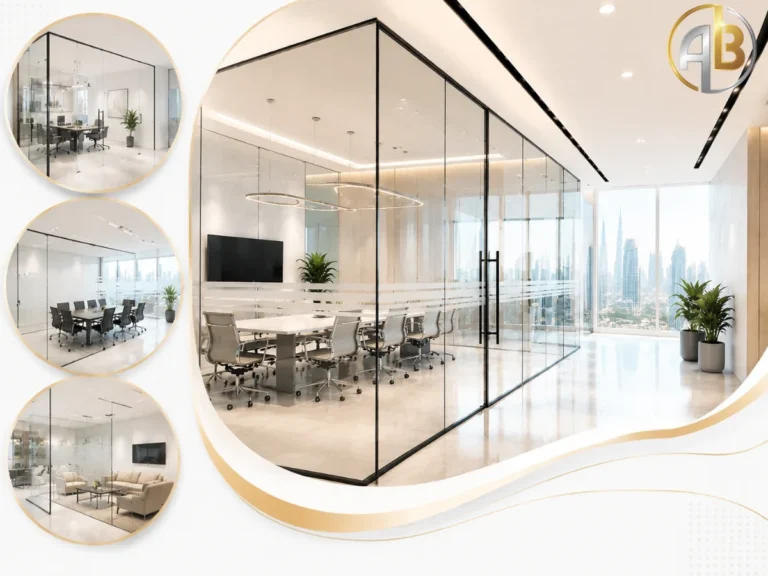
In a glass room Dubai installation, the visible frame interruption accumulates across every panel. A standard 100mm frame across a 10-metre perimeter leaves over 1,000mm of aluminium in the sightline. With a 30mm ultra-slim system, that drops to under 300mm. The room reads as glass, not metal.
Al Basira’s glass room Dubai installations use ultra-slim bi-fold panels that fold completely flat against the structure when open, converting a covered terrace into an open-air extension of the living space within seconds.
The practical detail that matters: slim bi-fold panels for glass room applications need to be specified with an embedded bottom frame and concealed drain channel. That flush threshold eliminates the trip hazard and the water ingress point, two of the most common failure points in older-style glass room installations across the UAE.
What Most Bi-Folding Door Guides Don’t Tell You
• The stacking direction changes everything. Bi-fold panels can stack left, right, or split to both sides. Most guides don’t mention it. In a villa where one side of the opening faces a structural column and the other faces an open terrace, getting the stacking direction wrong forces the folded panels into your usable outdoor space. Confirm the stacking configuration before ordering, not after.
• Panel count affects the opening width more than the door width does. A 4-panel bi-fold on a 4-meter opening gives you roughly 90% clear width when fully open. A 3-panel system on the same opening gives around 85%. The difference seems small until you’re trying to move furniture through it.
• Sand infiltration is the number one Dubai maintenance issue. Dubai’s fine desert dust enters through worn bottom seals and dry track rollers. The solution isn’t cleaning more often; it’s specifying EPDM gaskets and stainless-steel rollers rated for arid environments at the point of purchase.
• Powder coat color affects frame temperature. A dark bronze or black powder coat on an exposed south-facing frame in Dubai absorbs significantly more solar heat than a light grey or white finish. On non-thermally-broken systems, this doubles the thermal load on the adjacent glazing seal. Specify light colors for south-facing non-shaded applications.
• The flush threshold is the detail that separates good installations from great ones. Most standard bi-fold doors include a raised threshold bar. Ultra-slim systems from quality suppliers offer a concealed flush threshold with an integral drain. That 15mm difference in trip height doesn’t sound much, but it determines whether the transition between indoor and outdoor space feels like architecture or like stepping over a kerb.
Frequently Asked Questions
What is the difference between a bi-folding door and a sliding door in Dubai?
Bi-folding doors stack their panels to one or both sides when open, clearing up to 90% of the wall. Sliding doors glide along a track and open a maximum of 50% of the available width. Bi-folds suit wide openings where full wall clearance is needed. Slim sliding doors suit layouts where floor clearance space is limited or where a simpler mechanism is preferred.
Are slim bi-folding doors suitable for Dubai’s climate?
Yes. They’re specified with thermally broken aluminum profiles, EPDM weather seals, and low-E double glazing. These three features together protect against heat transfer, sand infiltration, and UV degradation. A non-thermally-broken system will conduct Dubai’s summer heat directly into the frame, increasing AC load and shortening seal life.
How much does a slim bi-folding door cost in Dubai?
Entry-level aluminum bi-fold systems start from around AED 2,000 for basic residential configurations. Premium ultra-slim thermally broken systems with European-grade profiles, the type suitable for luxury villa or glass room applications, typically range from AED 15,000 to AED 50,000+ depending on opening size, panel count, and glazing specifications. Installation is priced separately.
How do I maintain bi-folding doors in Dubai?
Oil the hinges every six months and clean the track every 4 months to remove sand buildup. Inspect the bottom seals annually. Dubai’s dust and UV exposure degrade EPDM is faster than temperate climates. Stainless steel rollers and powder-coated hardware require the least ongoing attention. Avoid silicone-based lubricants on tracks; they attract dust. Use a dry PTFE spray instead.
What is the best material for bi-folding doors in Dubai?
Aluminium dominates Dubai’s villa market for good reason. It’s structurally strong enough to support large, heavy glass panels on slim profiles; doesn’t warp in heat; and holds a powder coat finish for 15–20 years with proper care. Timber warps and cracks under UAE UV exposure. uPVC discolors and can soften in extreme heat. For any opening over 3 meters, thermally broken aluminum is the only material that combines structural integrity with thermal performance at this climate scale.
The Specification Decision That Determines the View
A 30–40 mm ultra-slim profile gives you the same structural performance as a standard 100 mm bi-fold frame at less than half the visible footprint, and that difference shows up every time you look out the window.
Thermal breaks aren’t optional in Dubai. A polyamide barrier in the frame profile is what separates a door that performs from one that radiates heat into your living room and drives up your electricity bill from June through September.
The flush threshold, the stacking direction, and the EPDM seal specification are the details that experienced installers get right on the first visit and that cheaper quotes quietly skip.
Al Basira supplies and installs slim bi-folding door systems across Dubai and the wider UAE, with a technical team that handles measurement, specification, and installation from a single point of contact. Visit albasira.ae to book a free site survey and receive a same-day written quote.