
You spent months getting the design of your Dubai home just right. Then summer hits, and suddenly the corner near the big living room window is the last place anyone wants to sit. The glass looks stunning from the driveway, but by 3 PM it’s practically radiating heat into the room.
This is one of the most common frustrations UAE homeowners run into, and it usually comes down to one decision made too quickly: the windows.
If you’re planning a renovation, building a new villa, or just replacing tired old frames, you’ve probably started searching for aluminium windows Dubai suppliers and getting a dozen different opinions.
- Which type is actually right for your home?
- What should you expect to pay?
- Do you really need double glazing, or is that just an upsell?
- Is a thermal break worth the extra cost?
This guide walks through all of it, in plain language, so you can make a decision you won’t second-guess in July.
Why Aluminium Windows Are Popular in Dubai Homes
Walk through any new villa community in Dubai and you’ll notice the same thing: big glass panels, slim frames, very little visible metal. That look is hard to pull off with bulkier materials, which is a large part of why aluminum shows up so often in UAE homes.
Built for Large Glass Openings and Modern Homes
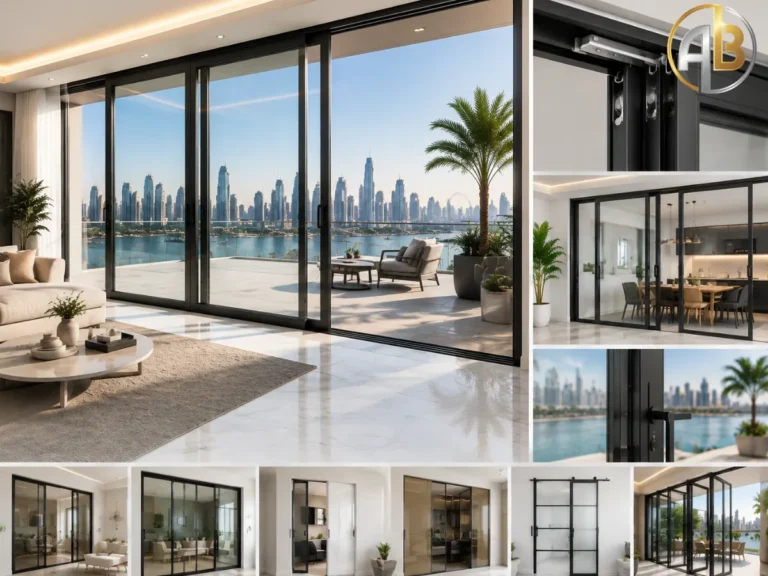
Aluminium frames can be made thinner than most alternatives while still holding large panes of glass securely. That matters in Dubai, where floor-to-ceiling glazing and wide sliding walls are practically the default in newer villas and apartments.
The slim profile also means more glass and less frame, which is exactly what most homeowners want when they’re paying for a view.
What Makes Aluminum Suitable for UAE Conditions?
Aluminum doesn’t rot, warp, or attract termites, and it holds up well against years of direct sun, dust, and coastal humidity without needing much upkeep. That’s a real advantage in this climate.
But here’s something worth being honest about: the frame alone does not control how hot a room feels. Heat performance comes from the whole system working together. The aluminum profile, the glass, the seals, and how well the window was installed. A great frame with poor glass will still let a room bake, especially on west-facing façades. Keep that in mind as you read on, because it changes how you should be comparing quotes.
Which Type of Aluminium Window Is Best for Your Home?
The best aluminium window is not the same for every room. A bedroom, a balcony, and a double-height living room wall all have different needs: ventilation, privacy, view, noise, and budget all pull in different directions.
| Window Type | Best For | Main Advantage | Things to Consider |
| Sliding | Balconies, wide openings | Space-saving | Track and roller quality |
| Casement | Bedrooms, kitchens | Full ventilation, good sealing | Needs clearance to open outward |
| Tilt & Turn | Multi-story homes | Two opening modes, easier cleaning | Higher cost than standard options |
| Fixed | Feature walls, living rooms | Maximum glass, no moving parts | No airflow at all |
Aluminium Sliding Windows
For balconies, terraces, and apartments across Dubai, sliding windows are often the practical choice simply because they don’t swing outward and take up no extra space. The trade-off is in the tracks and rollers; cheap hardware here wears out fast under daily use and Dubai dust, so it’s worth asking what quality of rollers and seals are actually included in your quote.
Aluminium Casement Windows
For bedrooms and kitchens where you actually want fresh air moving through, casement windows tend to seal better than sliding options because they close against the frame rather than sliding past it. That tighter seal also helps keep dust out, which anyone who’s cleaned a Dubai windowsill will appreciate.
Aluminium Tilt-and-Turn Windows
These open in two ways:
- Tilted from the top for gentle airflow, or
- Fully swung inward for cleaning.
Tilt-and-turn aluminum windows cost more than standard casement or sliding options, but for upper floors of a villa where cleaning the outside of the glass is awkward, that inward swing is genuinely useful.
Fixed Aluminium Windows
No moving parts, no hardware to maintain, just glass and frame. Fixed panels make sense for feature walls or large living-room glazing where you want maximum view and don’t need airflow through that particular opening.
What Determines Aluminium Window Prices in Dubai?
This is usually the first real question, and it’s a fair one. There isn’t a single number that applies across the board, because the final cost depends on several things working together: size, the aluminium profile used, glass type, whether it’s thermally broken, hardware quality, finish, and how complex the installation is.
Rather than guess at figures that may not hold up from one project to the next, it’s more useful to understand what actually moves the price up or down:
- Window size and number of panels
- Aluminium profile and system used
- Whether it’s thermally broken or standard
- Single or double glazing
- Low-E or solar-control glass
- Hardware quality: rollers, hinges, locks
- Powder coating or custom finish
- Custom shapes or non-standard sizes
- Removal and disposal of old windows
- Access difficulty during installation
Comparing Specifications, Not Just Numbers
| Specification | Lower-Cost Option | Higher-Specification Option |
| Aluminium profile | Standard, non-thermal | Thermally broken |
| Glazing | Single glazing | Double glazing |
| Glass type | Clear glass | Low-E or solar-control glass |
| Hardware | Standard rollers/hinges | Heavy-duty, branded hardware |
| Finish | Standard powder coat | Custom colour or premium finish |
Is a Cheap Aluminium Window Quote Actually Cheaper?
Two suppliers can quote very different numbers for what looks like the same window on paper. The gap almost always comes down to what’s included. Before comparing final figures, check what’s behind each quote.
The profile system, glass specification, hardware, finish, warranty, and whether installation and old-window removal are part of the price. A lower number that skips half of that isn’t actually the better deal; it’s just a smaller number on paper.
What Glass Should You Choose for Aluminium Windows in Dubai?
The glass matters just as much as the frame, sometimes more, and the right choice really comes down to where the window sits, its orientation, how much direct sun it gets, whether noise is an issue, and your budget.
Single Glazing vs Double Glazing
| Feature | Single Glazing | Double Glazing |
| Initial Cost | Lower | Higher |
| Heat Control | Basic | Better |
| Noise Reduction | Basic | Better |
| Best For | Budget-focused projects | Comfort-focused homes |
When Should You Consider Low-E Glass?
If your window faces west and catches direct afternoon sun, low-E (low-emissivity) glass is worth looking into. It’s designed to reduce the amount of solar heat passing through while still letting in natural light, which can make a real difference to how a west-facing room feels in the late afternoon.
Exact performance varies by product, so ask your supplier for the specification rather than relying on general claims.
What About Acoustic or Laminated Glass?
If you’re on a busy, road-facing property or near ongoing construction, acoustic or laminated glass can help cut down on the noise that finds its way through standard glazing. It won’t eliminate sound entirely, but the difference is often noticeable, particularly on lower floors.
Do You Need Thermal Break Aluminium Windows in Dubai?
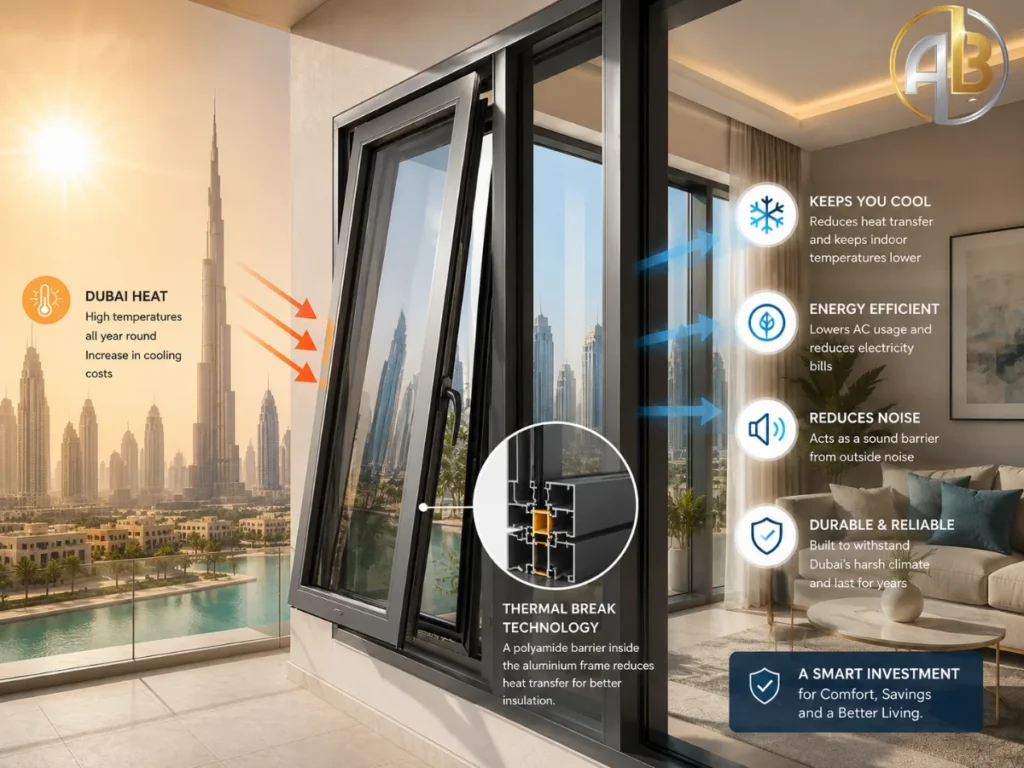
A thermal break is an insulating strip built into the aluminium frame itself, separating the outer and inner sections of metal so heat doesn’t travel straight through. Standard aluminium conducts heat easily, which is exactly what you don’t want on a frame that sits in direct sun most of the day.
It’s worth being clear, though: a thermal break improves the insulation of the frame itself, but the overall performance of the window still depends on the glass, the seals, and how well it’s installed. It’s one part of the system, not the whole answer.
When Is a Thermal Break Worth Considering?
It tends to make the most sense for large windows, full-height glazing, west-facing rooms, and villas running AC heavily throughout the day. If reducing heat gain near the windows is a priority for you, it’s worth putting on your shortlist.
Thermal Break vs Standard Aluminium
| Feature | Standard Aluminium | Thermal Break Aluminium |
| Heat Conduction | Higher | Reduced |
| Upfront Cost | Lower | Higher |
| Best For | Smaller windows, budget projects | Large glass areas, sun-exposed rooms |
It isn’t mandatory for every property. A shaded, north-facing bedroom window has different needs than a west-facing living room wall. The right choice depends on your specific windows, not a blanket rule.
How to Choose Aluminium Windows for Different UAE Homes
For Dubai Villa Owners
Large openings, strong sun exposure, and a desire for that clean modern look usually push villa owners toward aluminium windows for villas that pair slim profiles with better-performing glass, especially on west and south-facing walls where floor-to-ceiling glazing is common.
For Apartment Owners
Space is tighter, and high-rise buildings often have restrictions on what can be installed on balconies. Sliding windows tend to be the practical choice here, along with attention to noise reduction if you’re facing a busy road.
For Home Renovations
Replacing old windows means dealing with what’s already there: old frames to remove, openings that may not be perfectly standard-sized, and a need for accurate measurement before anything gets ordered. Budget realistically for removal and disposal, not just the new windows themselves.
For New Villa Projects
If you’re still in the planning stage, this is the best time to think about window specifications, not after the walls go up. Glass selection, frame system, and orientation all need to be considered together with your architect or contractor.
A Quick Dubai Villa Story: Choosing Between Two Window Options
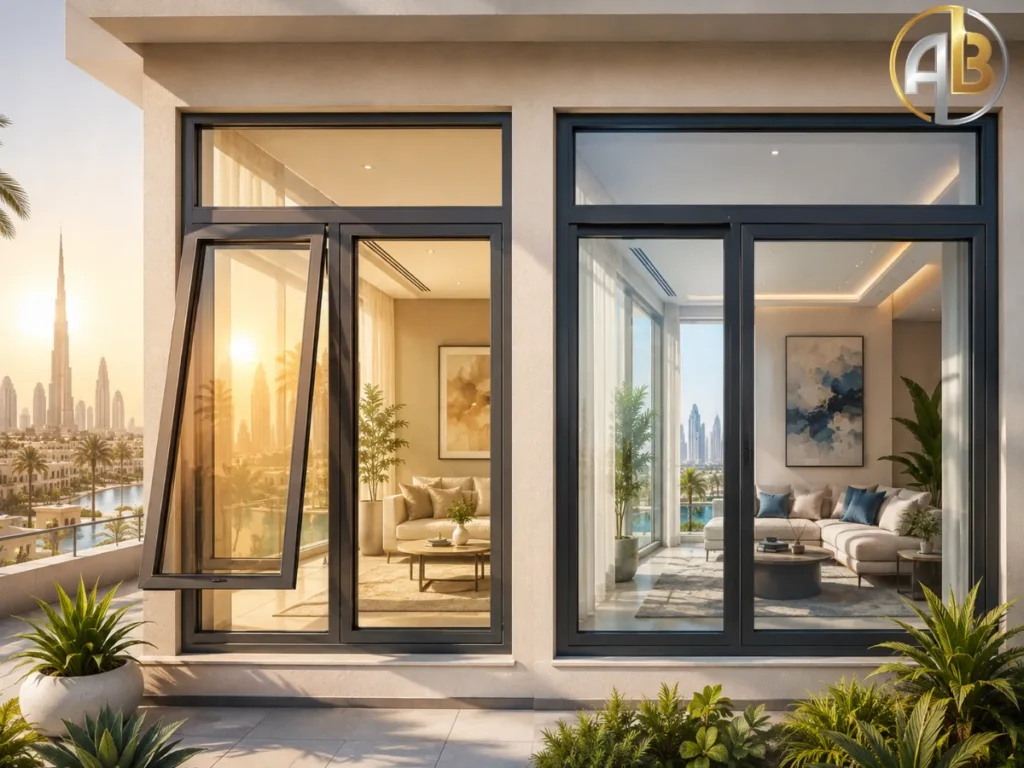
Picture a villa with a wide, west-facing living room wall, the kind of window that photographs beautifully but takes the brunt of the afternoon sun every single day.
The homeowner had two options in front of them.
- Option A: standard aluminum frames with basic glazing, the cheaper quote.
- Option B: thermally broken aluminium with better-performing glass, costing noticeably more upfront.
The lesson here isn’t “always choose the expensive one.” It’s that the cheapest quotation isn’t automatically the best choice, and the priciest specification isn’t automatically the right one either. The right call depends on the room, the sun exposure, the size of the glass, and what the homeowner actually wants: comfort, budget, or some balance of both.
How to Maintain Aluminium Windows in Dubai
Aluminium frames are low-maintenance, but a little care goes a long way in this climate. Clean the tracks regularly to stop dust and sand from building up and affecting how smoothly sliding windows move. Check seals every few months for cracking or gaps, and keep an eye on rollers and hinges so they don’t seize up.
Make sure drainage openings at the base of the frame stay clear, especially after dust storms, so water doesn’t pool. Stick to mild soap and water rather than harsh chemicals, which can damage the finish over time.
Why Professional Installation Matters
Even the best window specification can underperform if it isn’t installed correctly. Poor installation can lead to gaps around the frame, weak sealing, dust or water finding its way in, and windows that don’t align properly or become stiff to open over time.
Accurate site measurement before fabrication is one of the simplest ways to avoid these problems, since a frame cut to the wrong size rarely sits or seals the way it should.
7 Things to Check Before Buying Aluminium Windows in Dubai
- Aluminium profile or system being used
- Glass specification
- Whether it’s thermally broken
- Seals and hardware quality
- Exactly what’s included in the quotation
- Installation process and site measurement
- Warranty and after-sales support
Questions to Ask Your Aluminium Window Supplier
- What aluminium profile or system are you using?
- Is it thermally broken?
- What glass specification is included?
- Is installation part of the price?
- What hardware comes with it?
- What does the warranty actually cover?
- Will you do a site measurement before fabrication?
- Are removal and disposal of old windows included?
Aluminium vs uPVC Windows: Which Is Better for UAE Homes?
This comes up often enough to address, even though it’s not the main focus here.
Aluminium vs uPVC Windows
| Feature | Aluminium | uPVC |
| Durability | Very high when properly specified and maintained | Varies depending on the quality and specification of the system |
| Large Openings | Slimmer frames, suited to large glazing | Bulkier profile, less suited to very large openings |
| Maintenance | Low | Low |
| Appearance | Modern, slim sightlines | Bulkier frame profile |
| Cost | Varies by specification | Often lower upfront |
Which One Should You Choose?
There’s no absolute winner in the aluminium vs uPVC windows debate. It depends on your opening sizes, how much thermal performance you need, your design preference, your budget, and the type of property you have.
For large modern openings, aluminium tends to be the more common choice in UAE homes. For smaller, budget-conscious projects, uPVC can still be a reasonable option worth comparing.
Why Choose Al Basira for Aluminium Windows in the UAE?
Beyond the product itself, the process matters — accurate measurement, honest recommendations based on your specific windows, and installation that’s done properly the first time.
Al Basira works across aluminium doors and windows, sliding systems, and glass solutions, guiding homeowners from an initial site visit through to fabrication and final installation, rather than just supplying frames off a price list.
From Measurement to Installation
Site Measurement → Recommendation → Quotation → Fabrication → Installation → Final Inspection
Each step exists for a reason. Skipping site measurement, for example, is one of the most common causes of windows that don’t sit quite right or seal properly later on.
Frequently Asked Questions
How much do aluminium windows cost in Dubai?
Prices vary based on size, profile, glass type, and whether the window is thermally broken. Rather than a fixed number, it’s best to request a quotation based on your specific windows and requirements.
Which aluminium window is best for a Dubai villa?
It depends on the room. Sliding and casement windows work well for most spaces, while fixed panels suit feature walls, and thermally broken options are worth considering for large, sun-exposed glazing.
Are aluminium windows suitable for UAE weather?
Yes, aluminium holds up well against heat, sun and dust with minimal maintenance. How well it manages indoor heat, though, depends on the full system: frame, glass, seals, and installation together.
How long do aluminium windows last?
Aluminium is a durable, corrosion-resistant material, and with proper installation and maintenance, frames typically last for many years. Actual lifespan depends on the specific product and how well it’s cared for.
Are thermal break aluminium windows worth it?
For large, sun-exposed windows or homes prioritising indoor comfort, they can be worth the added cost. The value depends on window size, orientation, glass specification and budget.
What is the best glass for aluminium windows in Dubai?
It depends on the window’s exposure and your priorities. Low-E glass helps with solar heat on sun-facing walls, while acoustic or laminated glass helps in noisier locations. Double glazing generally improves both heat and noise performance over single glazing.
Ready to Get Your Windows Sorted?
If you’ve made it this far, you already know more than most people do before they request a quote. The next step is simple: tell Al Basira a bit about your property, whether it’s a villa or apartment, roughly how many windows you need, the approximate sizes, your glass preference, and whether this is a renovation or a new build.
From there, a site assessment can confirm exact measurements and the right specifications for your home, so the quotation you get actually reflects what you need.
Request a site assessment or ask for a quotation to get started.