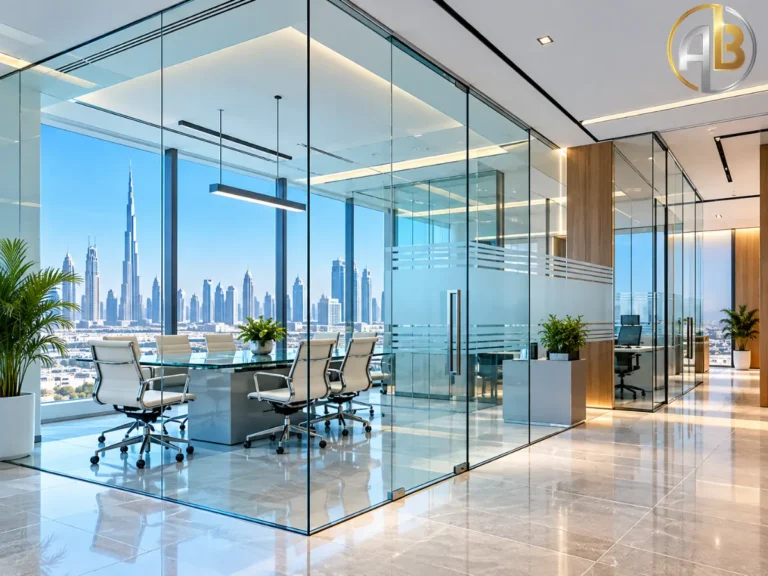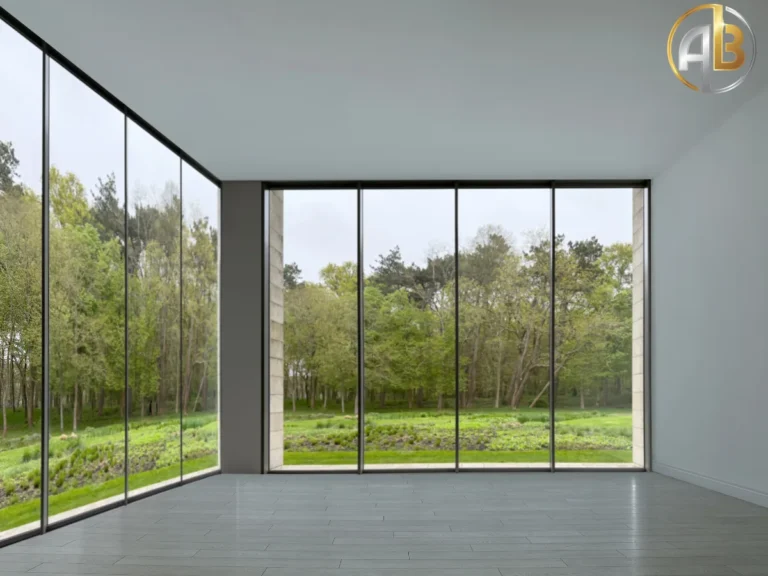

Stand at the base of any mid-rise or high-rise building in Business Bay, DIFC, or Dubai Internet City and look up. What you’re looking at- that seamless skin of glass and aluminium running floor to ceiling- is a curtain wall system. It’s not just a design choice. It’s a precision-engineered building envelope that determines how the structure breathes, performs, and ages.
In Dubai’s commercial construction sector, aluminum curtain walls are as standard as steel columns. But the difference between a system that performs beautifully for 30 years and one that starts failing within a decade comes down to specification, material quality, and installation discipline- and these vary enormously across the UAE market.
This piece breaks it down for anyone making decisions about commercial facades in the UAE- whether you’re an architect specifying a system, a developer overseeing procurement, or a contractor evaluating subcontractors.
What Is an Aluminum Curtain Wall, Actually?
An aluminum curtain wall is a non-load-bearing external cladding system- typically aluminium framing with infill panels of glass, metal, or opaque glazin- that is anchored to the primary building structure. Unlike traditional masonry or window wall systems, the curtain wall carries only its own weight and transfers wind and seismic loads to the main frame.
This distinction is critical: because it doesn’t carry structural loads, a curtain wall can span multiple floors with minimal visual interruption. That’s what gives modern commercial buildings that clean, unbroken glass-and-metal appearance. Read our detailed guide on Bi-Folding Doors vs Sliding Doors to compare their design, cost, performance, and suitability for different spaces.
“The curtain wall is the face of the building. Get it wrong and you’re looking at remediation costs that dwarf what you’d have spent doing it right the first time.”
Aluminum Curtain Wall Two Main Systems
1. Stick Curtain Wall
The traditional method- individual aluminium members (mullions and transoms) are fabricated and assembled on-site, with glass panels installed after the framework is in place. It’s more labour-intensive and weather-dependent, but offers more flexibility for irregular geometry and smaller projects.
In Dubai’s market, stick systems dominate mid-rise and lower-rise commercial builds where site-assembly is practical and budget is a primary constraint.
2. Unitised Curtain Wall
Factory-assembled panels- each panel comprising a full unit of framing and glass- are delivered and installed floor by floor. The process is faster on-site, more controlled in quality (factory conditions vs. site conditions), and produces a more consistent result at scale.
For high-rise towers and premium commercial projects in Dubai- the kind you’ll see in Downtown or along Sheikh Zayed Road- unitised systems are the specification standard. They’re more expensive upfront but deliver better long-term performance. Upgrade your kitchen with durable, waterproof, and termite-resistant aluminum kitchen cabinets designed for modern homes across the UAE.
Why UAE Climate Make Specification Decisions Critical?
Aluminum Curtain wall performance in the UAE isn’t simply about aesthetics. The climate throws specific demands at building envelopes that designers in temperate climates don’t have to consider in the same way:
- Solar load: Direct solar radiation in Dubai can reach 1,000 W/m² in summer. Without proper glass specification (solar control glazing, appropriate shading coefficients), solar gain through a curtain wall creates enormous air conditioning loads
- Thermal movement: Temperature swings between summer day and winter night can exceed 30°C in some parts of the UAE. Aluminium expands and contracts significantly; joints, seals, and fixings must accommodate this movement without failing
- Coastal air: Salt-laden air in coastal areas accelerates corrosion of inferior fixings, fasteners, and hardware. Marine-grade stainless steel and proper drainage design are non-negotiable in these locations
- Dust infiltration: UAE dust is fine and relentless. Inadequate joint design and weathersealing leads to dust penetration into occupied spaces and mechanical systems
Glass Specification: The Single Biggest Performance Variable
The glass specification within a curtain wall system has more impact on energy performance than almost any other single decision. Key parameters to understand:
U-Value
The U-value measures thermal transmittance- how much heat passes through the glazed unit. For Dubai, you want low U-values (high insulation). Double-glazed units with low-E coatings are standard; triple glazing is increasingly specified for the most thermally demanding applications. Enhance your home or commercial space with our premium Slim Sliding Doors, designed to maximise natural light, improve views, and create a modern, seamless look.
Solar Heat Gain Coefficient (SHGC)
This is arguably even more important in the UAE context. SHGC measures how much solar radiation passes through the glass as heat. A lower SHGC means less solar gain- critical for south and west-facing facades in Dubai.
Visible Light Transmittance (VLT)
You want daylight without the heat load. High-performance coatings can now achieve relatively high VLT alongside low SHGC- meaning bright, naturally lit interiors without excessive cooling costs. This balance point is worth discussing carefully with your glazing supplier.
Common Procurement Mistakes in the UAE Market
After working on commercial facade projects across the Emirates, the same procurement mistakes come up repeatedly:
- Specifying a system by brand name without confirming local technical support- if a fabricator can’t source genuine replacement parts or get technical backup from the system supplier, you have a long-term problem
- Accepting the lowest bid without asking for test reports- UAE building regulations require performance testing; ask for actual test certificates, not just claims
- Ignoring the drainage design- curtain walls are designed to manage water ingress into a controlled drainage system; poor drainage design leads to water damage inside the building envelope
- Separating supply from installation- the contractor who supplied the system should be responsible for installation; splitting these creates accountability gaps that are hard to manage when problems arise
Dubai Municipality & Compliance
Commercial facade systems in Dubai are subject to Dubai Municipality building regulations and must comply with UAE fire performance requirements- particularly relevant given heightened attention to cladding fire safety post-2017. For high-rise applications, non-combustible glass and metal cladding is the mandated standard, and specifiers should be familiar with UAE Fire and Life Safety Code requirements as they apply to external envelopes.
ACP (Aluminium Composite Panels) used as spandrel infill in curtain wall systems must meet the FR (Fire Resistant) core specification- not standard PE core. This is a compliance requirement, not a recommendation. Looking to upgrade your property exterior? Read our guide on ACP cladding in Dubai to understand the benefits, costs, materials, and important factors before starting your project.
Related Services from Al Basira
→ Aluminum Curtain Wall Systems
→ Glass Partitions for Commercial Interiors
Frequently Asked Questions
What’s the typical lifespan of an aluminium curtain wall system in Dubai?
A properly specified and installed curtain wall should perform for 30–40 years with periodic maintenance. The sealants (typically silicone) are the shortest-lived component and should be inspected and reapplied every 10–15 years.
How do Aluminum curtain walls perform in UAE earthquake risk areas?
The UAE has moderate seismic activity. Properly designed curtain wall systems include movement joints that accommodate both thermal and seismic movement. This needs to be part of the structural engineering review for any high-rise application.
Can Aluminum curtain walls be retrofitted on existing buildings?
Yes, it’s a common refurbishment approach for older commercial buildings in Dubai. The existing structure is assessed for anchoring suitability, and a new facade system is designed around it. It can dramatically change the appearance and energy performance of an ageing building.
What maintenance does a Aluminum curtain wall require?
Annual cleaning (both exterior and drainage channel inspection), seal inspection every 5 years, and full sealant renewal at 10–15 years. Facade access- rope access, gondolas, or swing stages- needs to be planned for in the building design